

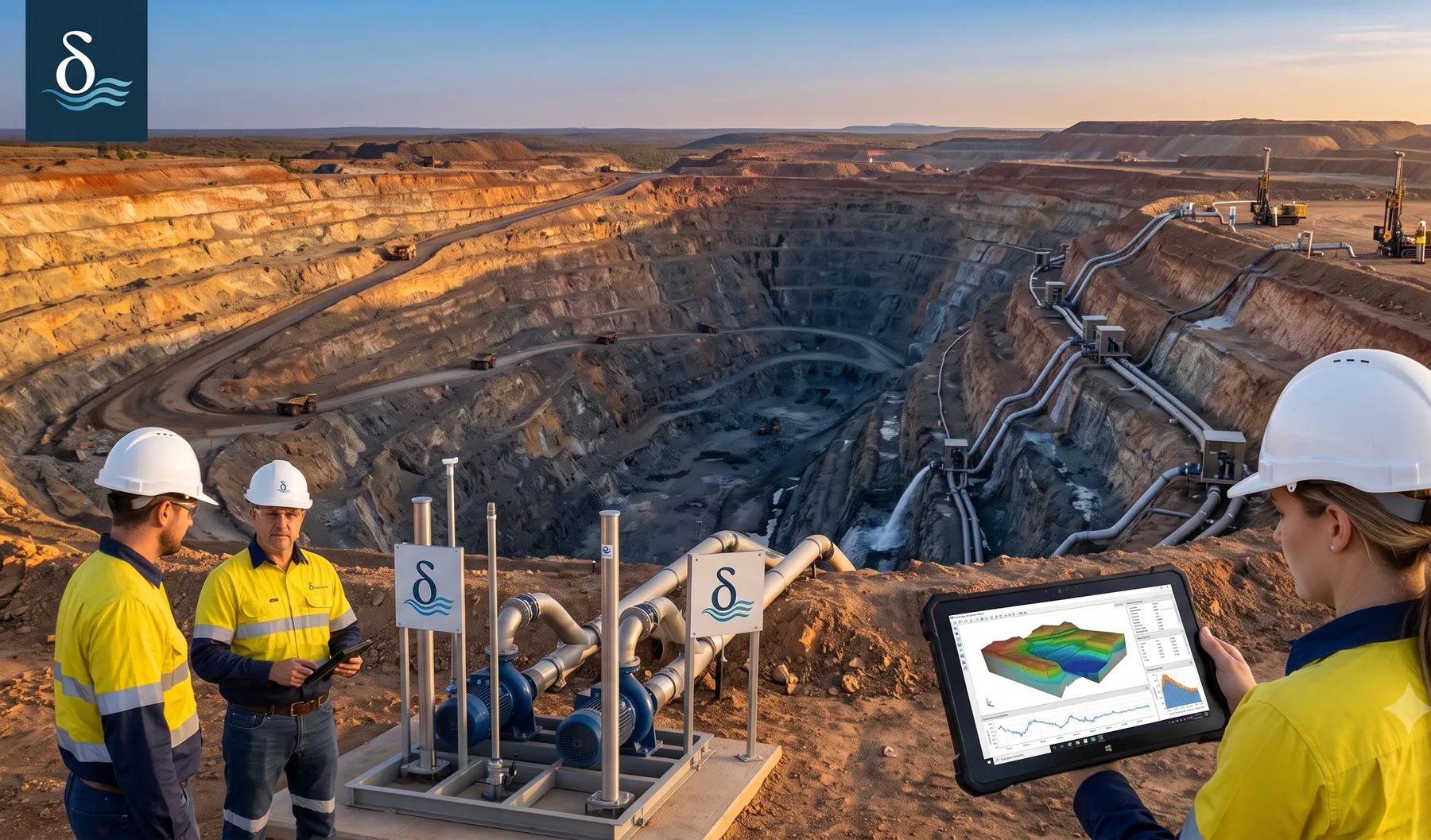
What is a pit dewatering study?
Pit dewatering studies quantify inflows and pumping strategy so mining operations can manage wet seasons safely—integrating storm runoff and groundwater where relevant.
Wet-season scenarios for operations
Dewatering studies are read under stress—when a storm stacks on top of delayed pumping. We document combined surface and groundwater scenarios with explicit operating assumptions so mine managers and regulators see the same risk picture.
Discharge and compliance hooks
Where discharge quality or volume ties to DWS licence conditions, we align hydrology outputs with the monitoring and reporting narrative environmental teams must maintain.
What we typically need from you
- Pit shell stages, ramp access, and sump locations; planned pumping rates and equipment
- Groundwater model excerpts, probe data, or hydrographs from dewatering contractors
- Meteorological design standards and wet-season operating constraints
- Discharge quality requirements and receiving environment sensitivities
Where we add technical depth
- Storm-driven surface inflow layered with groundwater inflow scenarios
- Sensitivity to sump lag, pump uptime, and emergency rainfall allowances
- Clear linkage between hydrology updates and mine scheduling / environmental reporting
- Documentation of data gaps where conservative allowances protect operations
When do you need this?
- Wet-season operational risk in open pits
- Underground workings with convergence of storm runoff and groundwater
- Discharge water quality and licensing interfaces
Our approach
-
Mechanisms
Separate storm-derived inflows from groundwater components where possible.
-
Rates & storage
Estimate pumping requirements and surge storage needs.
-
Discharge planning
Align discharge pathways with treatment and regulatory constraints.
What you'll receive
- Dewatering study memorandum
- Scenario tables for pumping and storage
Relevant SA standards
- Mine health & safety interfaces for water management
- DWS discharge and licensing context
FAQ
How do you coordinate with hydrogeologists?
Groundwater inflows come from specialist hydrogeology inputs such as groundwater model excerpts, probe data or dewatering contractor hydrographs. We layer storm-driven surface inflow on top of those groundwater scenarios and separate the two components where possible.
Do you model storms only, or storms and groundwater together?
We scope to the operational risk; sometimes storm scenarios dominate short-term planning. Where groundwater matters, we document combined surface and groundwater scenarios with explicit operating assumptions, including sump lag and pump uptime.
Can the study follow staged mining and pumping capacity?
Yes. We work from the pit shell stages, sump locations and planned pumping rates you supply, and align the scenario tables for pumping and storage with the staged mining plan and your pumping capacity constraints.
Do you cover discharge water quality?
Quality is coordinated with treatment specialists; hydrology defines volumes and timing. We align discharge pathways with treatment and DWS licence constraints and with the monitoring and reporting your environmental team maintains.
Do you assess emergency inflows?
Yes. We evaluate extreme storm inflows for contingency planning and surge storage, test sensitivity to emergency rainfall allowances, and document data gaps where conservative allowances protect operations.
Author
Robert FortuinAreas we serve
We work on projects across South Africa — see locations.
Related services
Ready to get started?
Contact us