

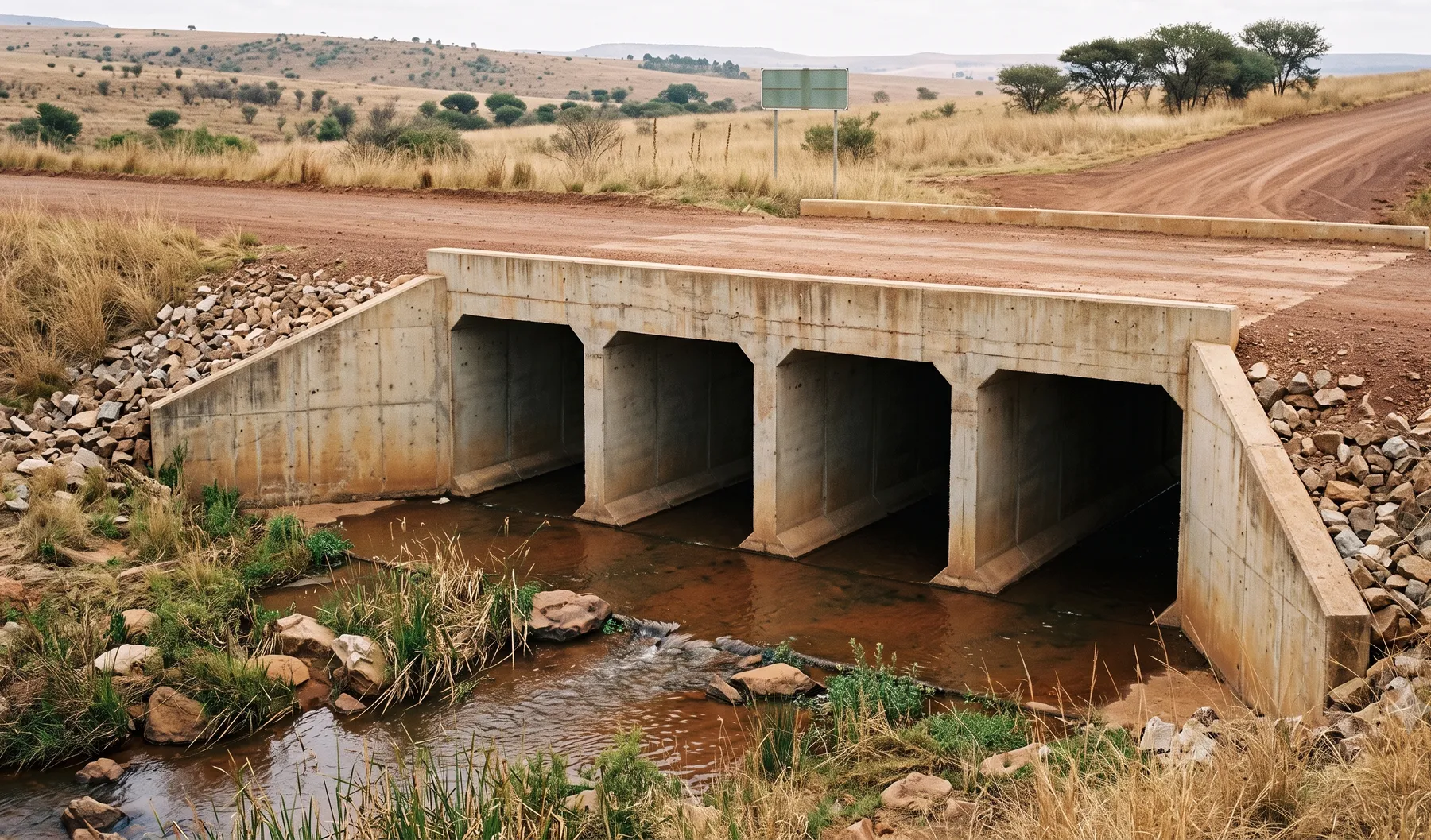
What is culvert design?
Culvert design sizes crossings for hydraulic capacity and safety—balancing headwater limits, outlet velocities, and maintenance under South African road standards, including SANRAL’s TRH drainage series for national and provincial roads.
Crossings that survive review and wet seasons
Culverts fail reviews when headwater, debris, and outlet velocity are only checked at a single storm. We document the governing case for inlet control, outlet control, and any fish or environmental baffles—so roads authorities see the full matrix.
Coordination with the wider corridor model
Where the culvert sits inside a longer 1D/2D reach, we align tailwater and approach flow distributions so the crossing is not analysed in isolation from the reach hydraulics.
What we typically need from you
- Design discharges, debris class assumptions, and fish-passage or environmental constraints
- Road geometry, cover depths, and allowable headwater from the authority
- Soil/pipe type preferences, bed key details, and construction sequencing notes
- Downstream channel survey and tailwater evidence for the design range
Where we add technical depth
- Inlet control vs outlet control checks across the storm range with explicit blockage cases
- Velocity and scour screening at the outlet with protection sizing where needed
- Headwater pool routing where ponding upstream affects adjacent properties
- Sketches and tables aligned to SANRAL-style hydraulic checking expectations
When do you need this?
- Road upgrades with constrained headwater or debris risk
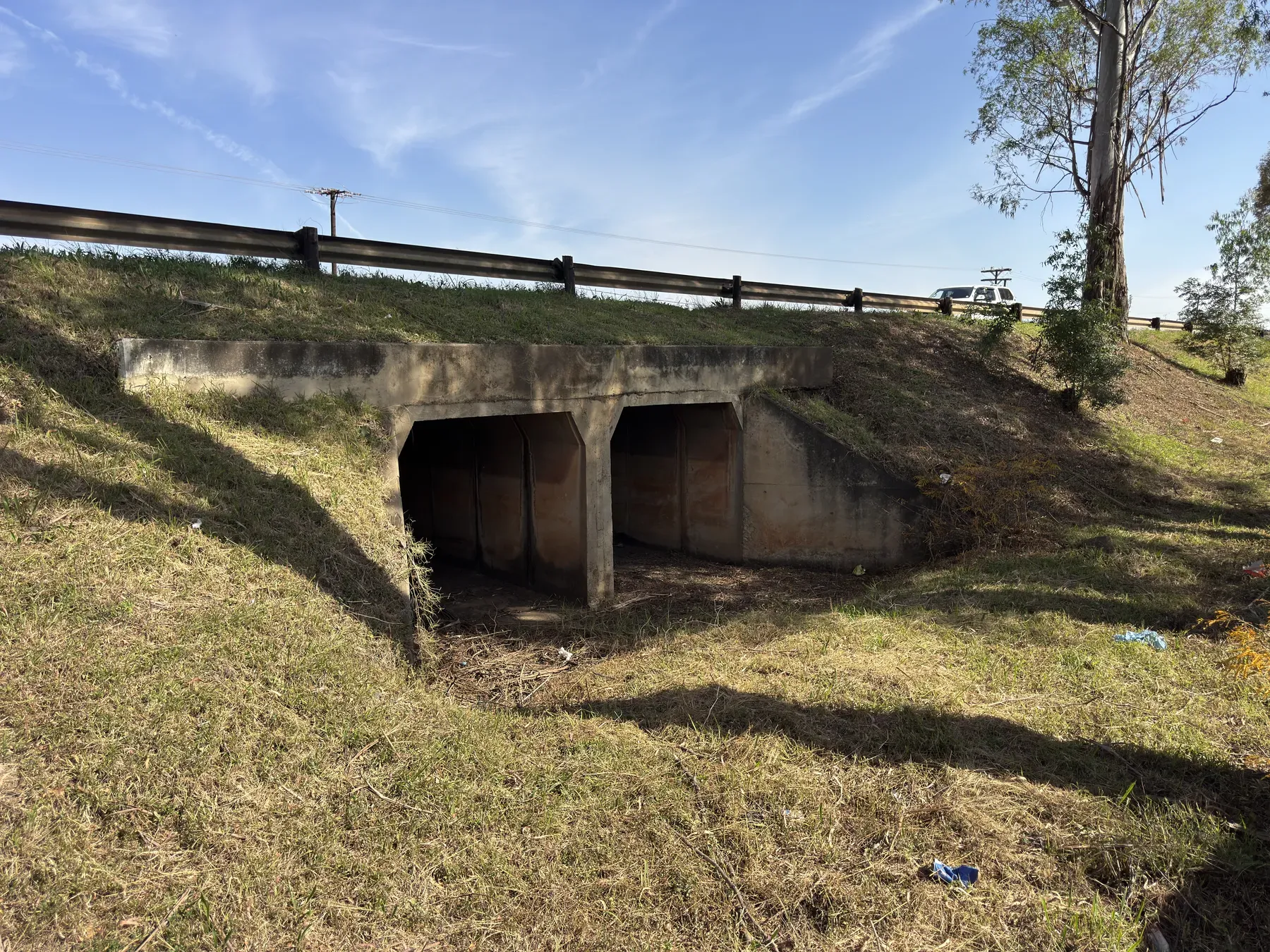
- Multi-cell crossings and complex inlet configurations
- Fish passage or environmental constraints on crossings
Our approach
- 1
Design flows
Align hydrology to road authority standards.
- 2
Inlet & outlet control
Evaluate headwater, velocity, and debris assumptions explicitly.
- 3
Protection works
Design aprons, cutoffs, and energy dissipation as required.
What you'll receive
- Culvert hydraulic report
- Design tables and sketches
Relevant SA standards
- SANRAL TRH & hydraulic culvert practice
- Municipal geometric constraints
FAQ
FHWA HDS-5 style checks?
We apply inlet/outlet control methodologies appropriate to the brief and authority.
Debris factors?
Where required, we document blockage assumptions and sensitivity.
Fish passage or multi-cell layouts?
We coordinate hydraulic capacity with environmental and geometric constraints, documenting trade-offs for reviewers.
What do we receive besides the memo?
Stage-discharge summaries, headwater sketches, and tables civils can lift into drawings—plus key model excerpts when 1D/2D routing is used.
Author
Stephan DreyerAreas we serve
We prepare location-specific briefs for major centres across South Africa — see locations.
Related services
Related reading
- Time of Concentration: Formulas, Methods, and Common Pitfalls
- What We Find When We Inspect Culverts: Common Defects That Quietly Erase Capacity
- How Culvert Sizing Actually Works (and Why "Just Add Another Pipe" Fails)
- Energy Dissipators: Slowing Water Down Before It Destroys Your Channel
- Gabions vs Reno Mattresses vs Riprap: Choosing Channel and Bank Protection
- Low-Level River Crossings: Designing for Overtopping, Debris and Safety
Ready to get started?
Contact us →Doing it yourself? Our engineering platform at studio.deltahydro.tech supports workflows in this service area.