

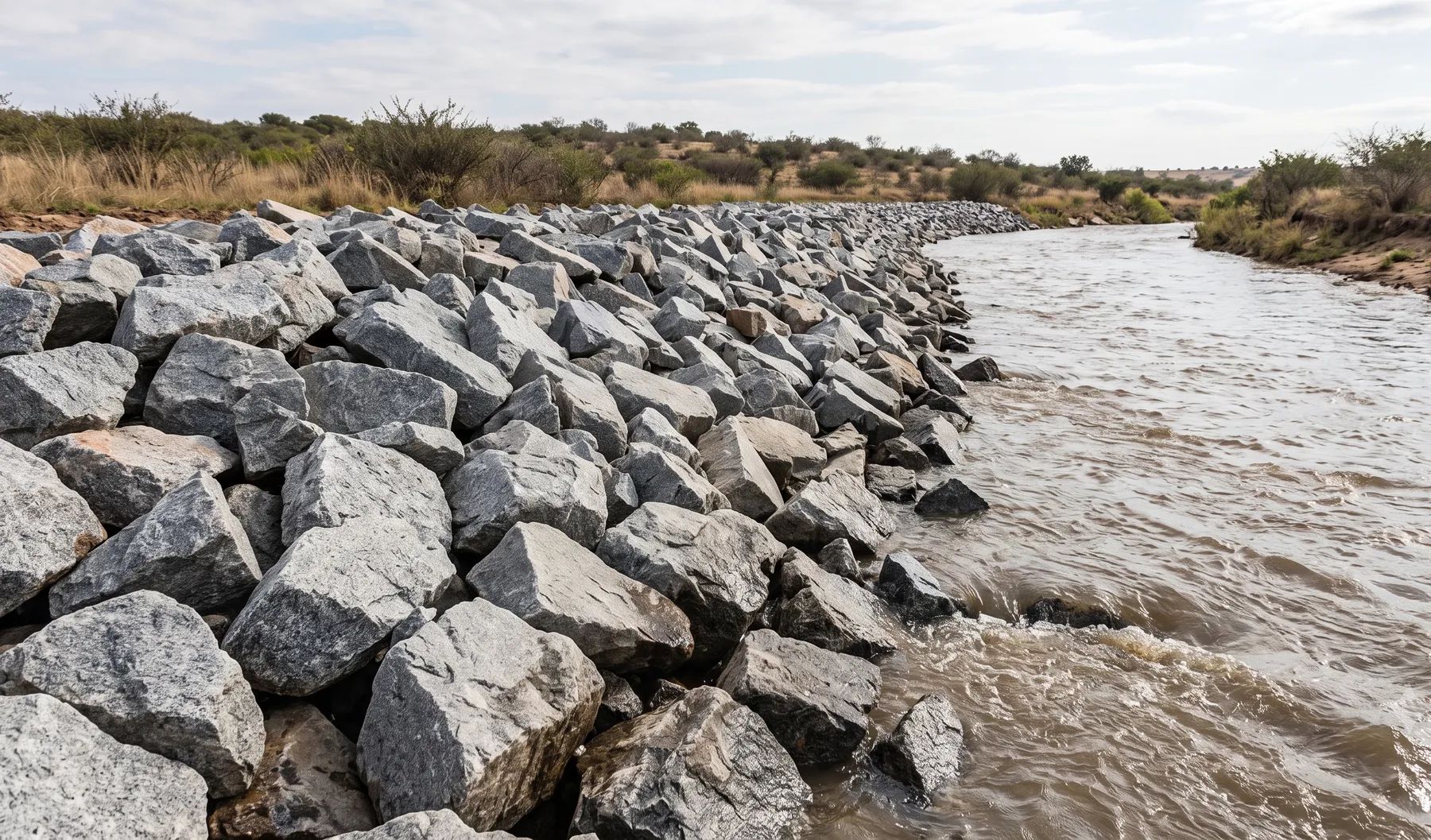
What is scour and erosion protection?
Scour and erosion protection stabilises channels, outlets, and structures against high velocities—reducing maintenance and failure risk.
Hydraulic energy managed with geotech realism
Scour protection fails when hydraulic stress and placement practicality diverge. We tie rock sizing and mattress systems back to modelled velocity fields and geotech bearing/filter rules (aligned to SANRAL scour guidance in transport contexts), not catalogue picks alone.
Long-term maintenance view
We document inspection access, debris management, and repair triggers so asset owners know what “good” looks like after the first wet season.
What we typically need from you
- Design velocities, turbulence, and tailwater ranges from hydraulic models
- Geotechnical foundation parameters, riprap sources, and constructability constraints
- Environmental constraints on rock sourcing or in-stream works windows
- Maintenance access and debris expectations from the operator
Where we add technical depth
- Protection classes matched to velocity, turbulence, and failure consequence
- Interface detailing with piers, aprons, stilling basins, and natural channel transitions
- Documented assumptions on rock shape, size, and filter compatibility
- Sensitivity to tailwater, debris, and partial construction states where relevant
When do you need this?
- High-velocity outlets and spillways
- Bridge piers and abutments in erodible materials
- Downstream of culverts and control structures
Our approach
-
Velocity & shear assessment
Quantify hydraulic loads for design storms.
-
Protection selection
Size rock, mattresses, and geotechnical interfaces.
-
Details & sequencing
Provide constructible details and staged construction notes.
What you'll receive
- Hydraulic design memo
- Typical details and bill-friendly quantities
Relevant SA standards
- SANRAL hydraulic and scour guidance (transport contexts)
FAQ
How do you size riprap?
We quantify velocity and shear for the design storms, then select a method appropriate to velocity, turbulence and material availability. Assumptions on rock shape, size and filter compatibility are documented in the hydraulic design memo.
Do you coordinate with geotechnical engineers?
Yes. Rock stability, filter compatibility and foundation preparation are coordinated with the geotechnical engineer, using their foundation parameters and riprap sources. Every system sits on a filter layer of graded stone or geotextile.
Do you design gabions and mattresses?
Yes. Gabions suit steep geometry, high velocity and constrained footprints; Reno mattresses suit low-profile bed and bank linings. Where wire theft or aggressive water is a risk, riprap may be the better choice.
What about debris and blockage?
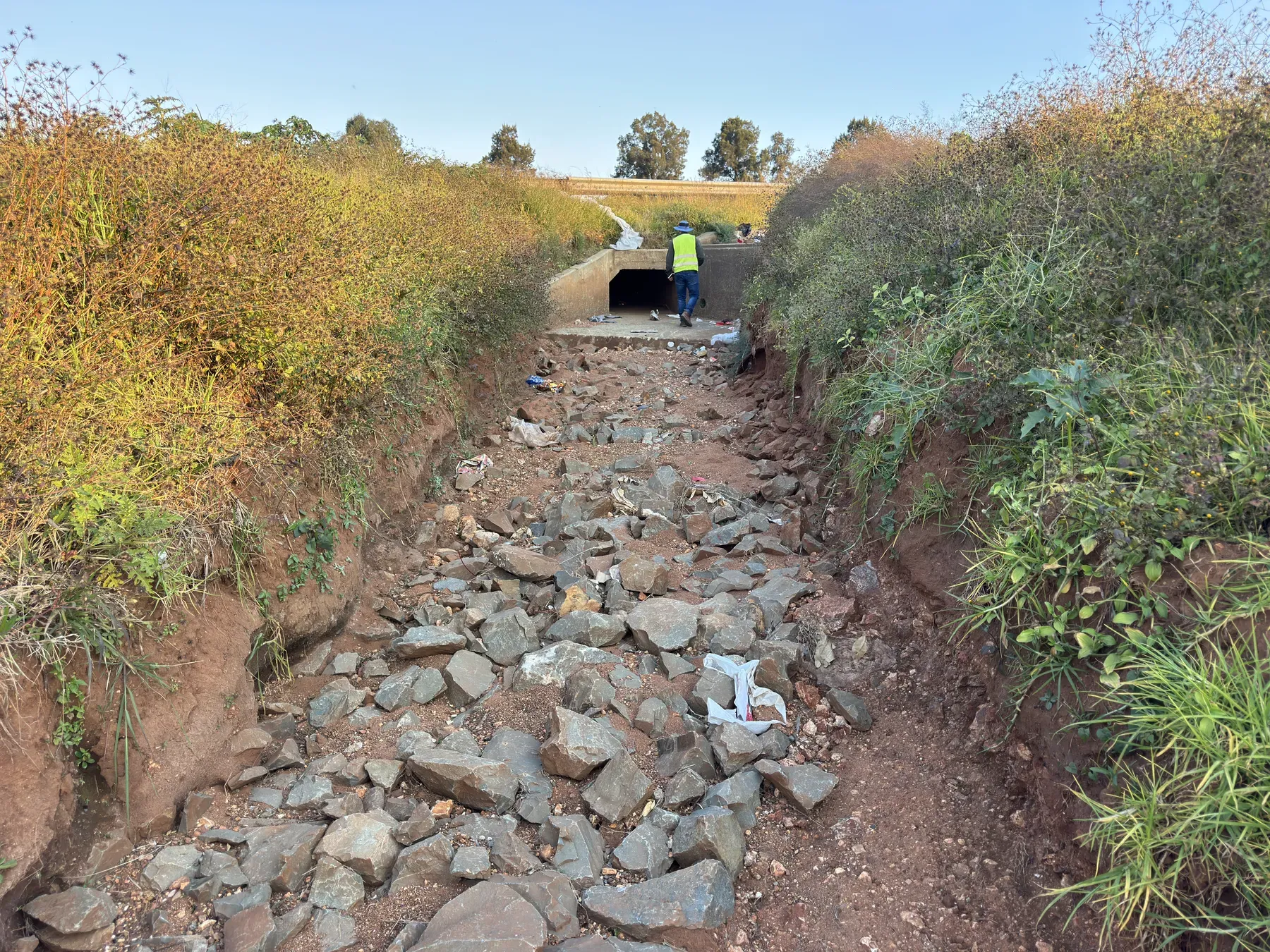
Where relevant, we assess debris risk at culvert mouths and test sensitivity to debris, tailwater and partial construction states. Conservative assumptions are documented in the memo, with the operator's maintenance access and debris expectations.
What maintenance will the protection need?
We specify inspection points and access, debris management, and repair triggers after major storms, so asset owners know what "good" looks like after the first wet season.
Author
Stephan DreyerAreas we serve
We work on projects across South Africa — see locations.
Related services
Related reading
- Berms, Levees and Flood Walls Next to Rivers: When Are They Legal?
- Bridge Waterway Assessments: Afflux, Freeboard and Scour Explained
- Energy Dissipators: Slowing Water Down Before It Destroys Your Channel
- Gabions vs Reno Mattresses vs Riprap: Choosing Channel and Bank Protection
- How to Reduce Flooding on Your Property Legally
- Temporary Works in Rivers and Floodplains: What Needs Authorisation
- Crossing a Watercourse? When You Need a Section 21(c) & (i) Water Use Licence
- Why Erosion Protection Fails: Field Lessons from Riprap and Gabion Failures
Ready to get started?
Contact us