

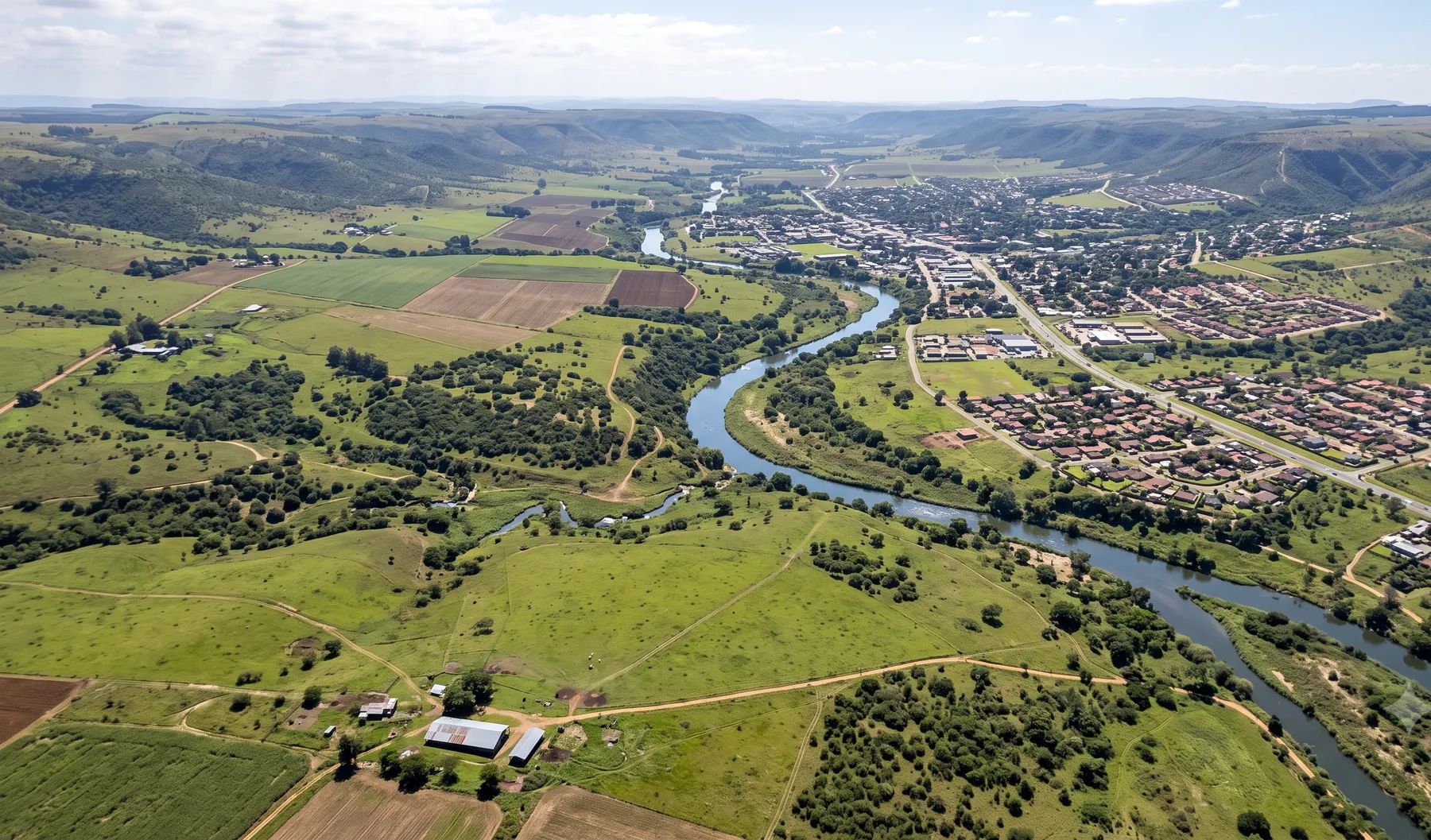
What is a catchment study?
Catchment studies describe how rainfall becomes runoff across nested subcatchments—supporting master planning, flood studies, and the water-resource decisions that fall under the Department of Water and Sanitation’s catchment planning context.
Catchment narratives planners can reuse
Catchment studies should survive master planning updates without redrawing everything. We structure subcatchments, losses, and response metrics so later flood or stormwater models inherit the same boundaries and assumptions.
DEM and land-use limitations
We call out where LIDAR age or coarse land cover shifts volumes materially, and show quick sensitivities so clients invest in better data only where it changes decisions.
What we typically need from you
- DEM source, resolution, and preferred coordinate reference for GIS deliverables
- Land use scenarios, proposed disturbances, or future development envelopes
- Rainfall products, climate change guidance, or regional study precedents to align to
- Monitoring data, weir ratings, or spot gauging to benchmark sensitivities
Where we add technical depth
- Nested subcatchment structure that supports master planning and phased development
- Sensitivity to DEM quality, imperviousness, and routing assumptions
- Outputs formatted for flood studies, water balances, or licensing annexes downstream
- Clear documentation of delineation methods and QC checkpoints
When do you need this?
- Regional master planning and phased developments
- Understanding nested subcatchments and cumulative effects
- Water resource and flood planning at catchment scale
Our approach
-
Delineation & data
Use quality DEMs and field checks at critical boundaries.
-
Hydrological response
Model land-use scenarios and climate sensitivities as required.
-
Synthesis
Translate results into planning guidance and risk narratives.
What you'll receive
- Catchment study report
- GIS layers and figures
- Scenario tables
Relevant SA standards
- DWS catchment planning context where relevant
- Municipal planning overlays
FAQ
Is GIS delineation enough, or do we need a hydrological model?
Delineation gives areas and boundaries. Where a decision needs flows, we run the hydrological response on the same nested subcatchments, so later flood or stormwater models inherit the same boundaries and assumptions.
Can you model cumulative or phased development?
Yes. We represent phased urbanisation as land-use scenarios on the nested subcatchment structure and report them in scenario tables. Sensitivity to imperviousness and routing assumptions is shown, and the limitations are stated explicitly.
What DEM resolution do you use?
It depends on catchment scale and how accurately a boundary must be placed. Global DEMs such as SRTM or Copernicus suit delineation and regional screening; at critical boundaries we use better terrain data and field checks. We document sources and vertical uncertainty.
What GIS outputs do you provide?
GIS layers and figures in the coordinate reference system you specify, with the delineation method and QC checkpoints documented. They are formatted for downstream flood studies, water balances or licensing annexes.
Author
Robert FortuinAreas we serve
We work on projects across South Africa — see locations.
Related services
Related reading
Ready to get started?
Contact us