

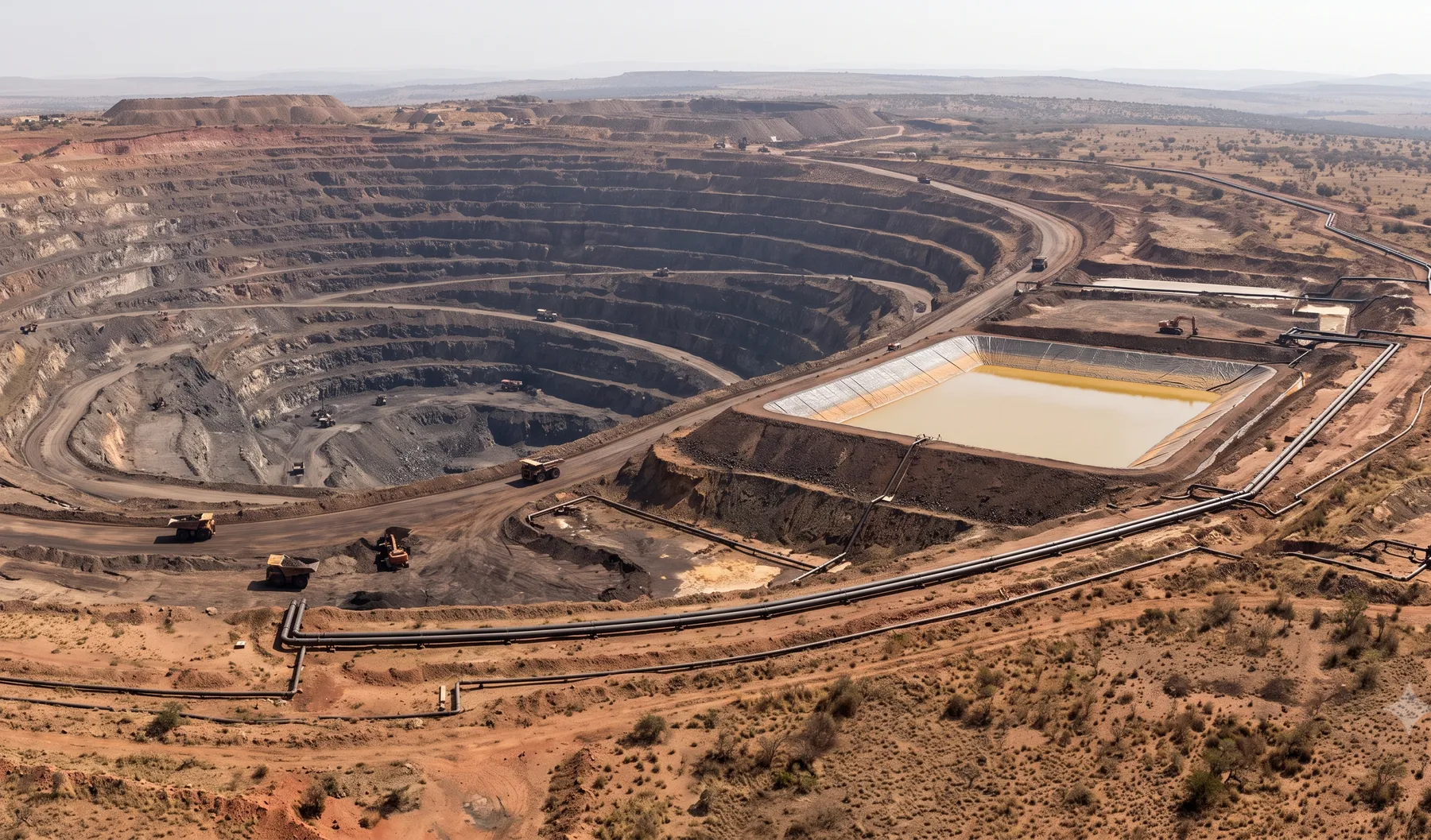
Sector
Water Management for Mining Operations
Mine water balances, TSF studies, pit dewatering, and flood studies for South African mining operations.
- Mine water balances that survive MR and DWS review
- TSF water management aligned to SANS and GISTM expectations
- Pit dewatering, inflow, and climate-sensitivity studies
- Flood hazard on and around mining footprints
What we offer
Consulting
- Catchment Studies
- Dam Break Analysis
- Dam Safety Evaluations
- Hydraulic Modelling
- Hydrological Studies
- Mine Water Management
- Pit Dewatering Studies
- PMF Analysis (Probable Maximum Flood)
- Scour and Erosion Protection
- Surface Water Management
- TSF Water Balance (Tailings Storage Facilities)
- Water Use Licence Applications (WULA)
Flood Risk Intelligence
- Flood Hazard Mapping Beta — growing coverage
Flood risk intelligence coverage for this sector
We are building toward national coverage. Each offering below shows where it stands today.
Available today with established methodology.
- —
In development — not yet available as a live offering.
- —
Why mining operations work with us
A mine water balance carries consequences beyond the spreadsheet: under-estimate inflow to a TSF and you carry avoidable freeboard risk; over-estimate pit dewatering demand and you size pumping infrastructure the operation does not need. We build balances and flood assessments with each input term traced to a source — site monitoring data where it exists, regional records and a stated assumption where it does not — so a Mine Residue, DWS, or internal technical reviewer can verify the number rather than take it on faith.
Tailings-related work is scoped against SANS and, where GISTM commitments apply, against that standard’s water-management and flood-hazard expectations too. We treat the two as complementary requirements rather than picking one over the other.
How we work with mining operations
Typical engagements include:
- Mine water balances. Full-site or facility-level water balances covering rainfall, run-off, seepage, evaporation, and process demand, scoped to support water-use licensing, MR reporting, or internal planning.
- TSF water management and flood hazard. Water balance, freeboard, and flood-hazard assessment for tailings storage facilities, aligned to SANS and, where applicable, GISTM.
- Pit dewatering and inflow studies. Pit inflow estimation and dewatering demand, including sensitivity to rainfall variability and climate scenarios, feeding pumping and storage design.
We are used to working across NEMA and National Water Act requirements alongside a mine’s own technical governance, and can scope work as a single facility study or a consistent methodology applied across a multi-pit, multi-TSF operation — including closure-stage scenarios where the operating case no longer applies.
FAQs
- Do your mine water balances hold up under MR and DWS review?
- We build the balance from stated inflows, outflows, and storage terms — rainfall, run-off, seepage, evaporation, process demand — with each term traced to a source (site data, regional records, or a documented assumption) so a Mine Residue or DWS reviewer can query any single number without unpicking the whole model.
- Can you align TSF water management with GISTM as well as SANS?
- Yes. Where a TSF falls under Global Industry Standard on Tailings Management commitments, we scope the water balance and flood-hazard components to support that reporting alongside the SANS design and safety requirements that already apply locally.
- Do you handle pit dewatering, or only surface water?
- Both. Pit inflow and dewatering studies — including sensitivity to rainfall variability and climate scenarios — sit alongside surface water balance and TSF work, since the two are rarely independent on an active mine.
- What about flood hazard on the mining footprint itself — pits, dumps, TSFs, haul roads?
- We assess flood hazard across the footprint as a single picture rather than site-by-site in isolation, since diversion berms, pollution control dams, and TSF freeboard all interact with the same design storms.
- Can you support closure planning, not just an operating mine?
- Yes. Post-closure flood and water balance behaviour — how the site responds once pumping and active management stop — is typically a distinct scenario from the operating case, and we scope it separately where closure planning requires it.
- Do you work across multiple pits or TSFs on one operation?
- Yes. Multi-facility operations are common — we apply a consistent methodology and design-event basis across pits, dumps, and TSFs on the same site so the results are comparable and a single reviewer can sign off the set.
Related reading
-
PMF vs RMF: Which Applies to Your Dam?
A plain-language overview of extreme flood concepts for dam safety in South Africa—and when to engage specialists early.
-
Data Pipelines for Water Utilities: From Telemetry to Decision
Water utilities collect telemetry constantly and use a fraction of it. A data pipeline is what turns raw sensor streams into clean, reliable information decisions can rest on. What one involves, and why it matters.
-
Pipelines and Services Crossing Rivers: Scour, Flotation and Flood Loading
Floods take out pipeline crossings through bed scour, bank migration, flotation and debris impact. A guide to design flood, cover depth, protection options, and post-flood inspection.
-
Crossing a Watercourse? When You Need a Section 21(c) & (i) Water Use Licence
Culverts, pipelines, bridges and bank protection usually trigger Section 21(c) and (i) water uses under the National Water Act. Here is what that means, the General Authorisation vs full WULA decision, and the timeline.
-
Gabions vs Reno Mattresses vs Riprap: Choosing Channel and Bank Protection
Gabions, Reno mattresses, and riprap protect channels and banks in different ways, with different velocity limits, costs, and maintenance realities. A plain decision guide for South African conditions.
-
Why Erosion Protection Fails: Field Lessons from Riprap and Gabion Failures
Erosion protection rarely fails in the middle of a panel — it fails at edges, toes, and terminations, or because the filter layer was skipped. Field lessons from real riprap and gabion failures.