

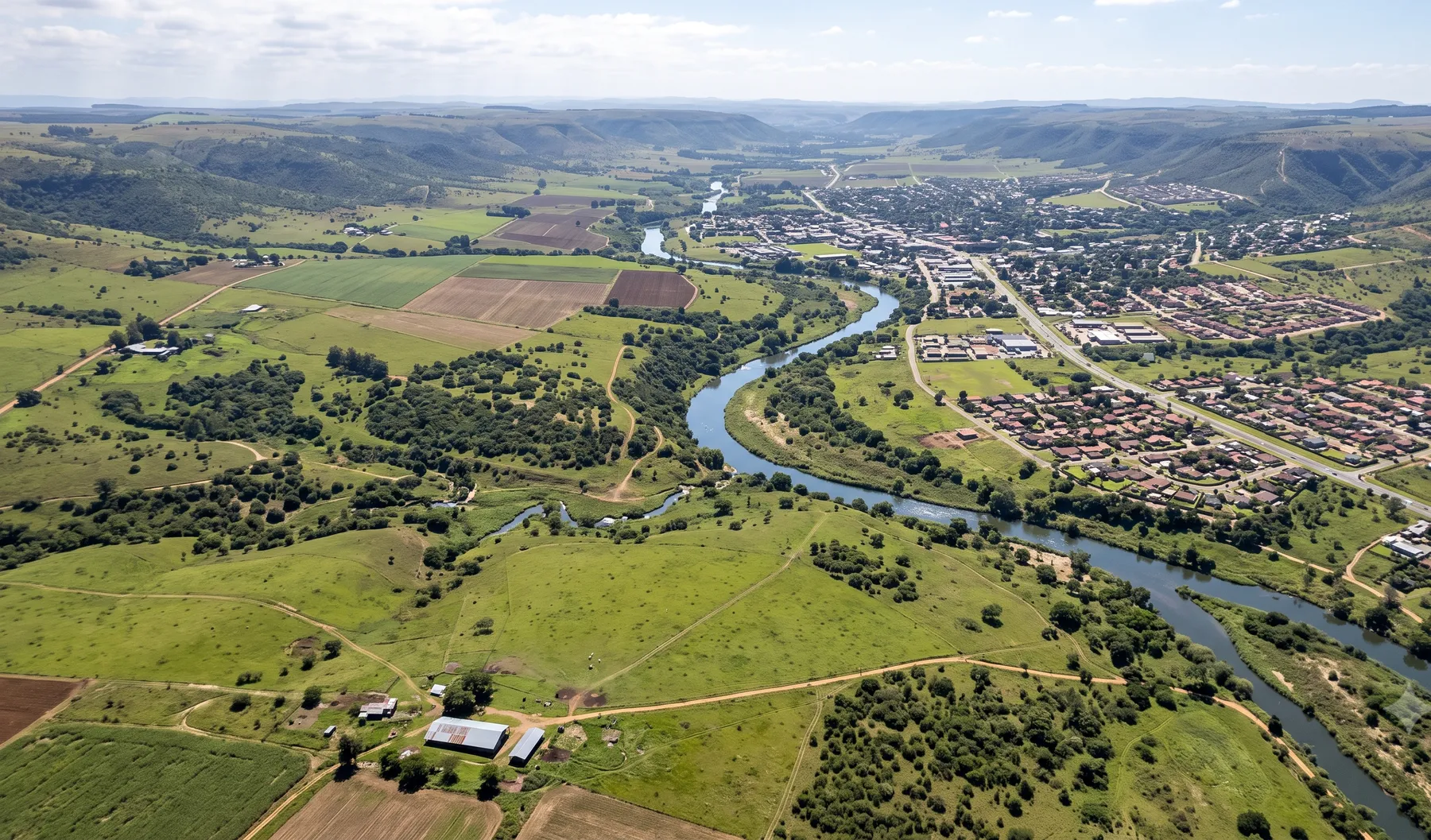
Who it's for
Insurers quantifying exposure, municipalities planning land use, and engineering firms that need peer-reviewable hazard layers for their projects.
Coverage today
Hazard layers available today in selected catchments; coverage expanding region-by-region toward nationwide availability.
Who it’s for
Flood hazard mapping is the foundation for most downstream flood risk work. Insurers use it to price exposure and set accumulation limits. Municipalities use it to plan land use, check infill proposals, and respond to public queries. Engineering firms use it as the hazard input to their own designs — detention sizing, culvert hydraulics, and site-specific floodlines.
We scope each engagement around the decisions the maps will inform: the geography, the design events, and the format the receiving team actually needs.
What you get
- Depth-and-velocity raster layers at agreed return periods, delivered in GeoTIFF and ESRI grid formats.
- Flood extent polygons suitable for overlay in municipal GIS, property-level scoring, or portfolio aggregation.
- A methodology report documenting the hydrology, hydraulic scheme, calibration points, and sensitivity tests.
- A reviewer brief that traces inputs back to verifiable sources — for municipal review, peer review, or internal governance.
- Optional property-level lookups on top of the hazard layers (see also our Property-level flood risk scoring offering).
How it works
- Scope and data audit. We confirm the extent, design events, target accuracy, and the reviewer or decision-maker the outputs will need to satisfy. We audit the topography, hydrology, and hydraulic boundary data available for the study area, and flag gaps before they become downstream surprises.
- Hydrology. Flows are developed from gauged catchments where available, and synthesised with documented method choices where they are not. Assumptions and uncertainty are recorded explicitly.
- Hydraulic modelling. We use 1D/2D hydraulic schemes suited to the catchment — typically 2D for urban and complex floodplains, 1D/2D hybrids for rural or corridor-scale studies. Calibration against historical events is performed where data permits; otherwise sensitivity tests replace it, with the trade-off stated.
- Mapping and outputs. Depths, velocities, and extents are post-processed to agreed formats. A short methodology report accompanies every delivery.
- Review loop. One iteration of review and clarification is included. Larger rework is quoted separately so there are no surprises.
Coverage
Today we have production-grade hazard layers for selected South African catchments. We are actively expanding — region-by-region, typically following client-funded work. If you need coverage we do not yet have, we will quote the incremental modelling work alongside the rest of the engagement.
What this is not
This is a service engagement, not a live data product. You do not log in to a portal; you receive deliverables and a report. A consolidated subscription platform is on our roadmap but is not live — see Insurance risk platform for the roadmap entry.