

Gabions vs Reno Mattresses vs Riprap: Choosing Channel and Bank Protection
· Written by Stephan Dreyer · Reviewed by Robert Fortuin
Gabions, Reno mattresses, and riprap all keep flowing water from eroding a channel or bank — but they do it in different ways, and choosing between them is not a matter of preference. Each resists flow through a different mechanism, tolerates a different range of velocity and shear, and carries a different maintenance and theft risk in South African conditions. Here is how to tell which one fits.
Choosing bank or channel protection? The right answer comes from the shear your flow actually imposes — we model it and specify to it, rather than defaulting to a standard detail.
Scour and erosion protectionHow each system resists the flow
- Riprap resists erosion by mass — individual rocks heavy enough that the flow cannot move them. It is flexible (it can settle into a scour hole without failing catastrophically) and rough (it dissipates energy). It needs space, because stable rock on a steep or fast section gets large.
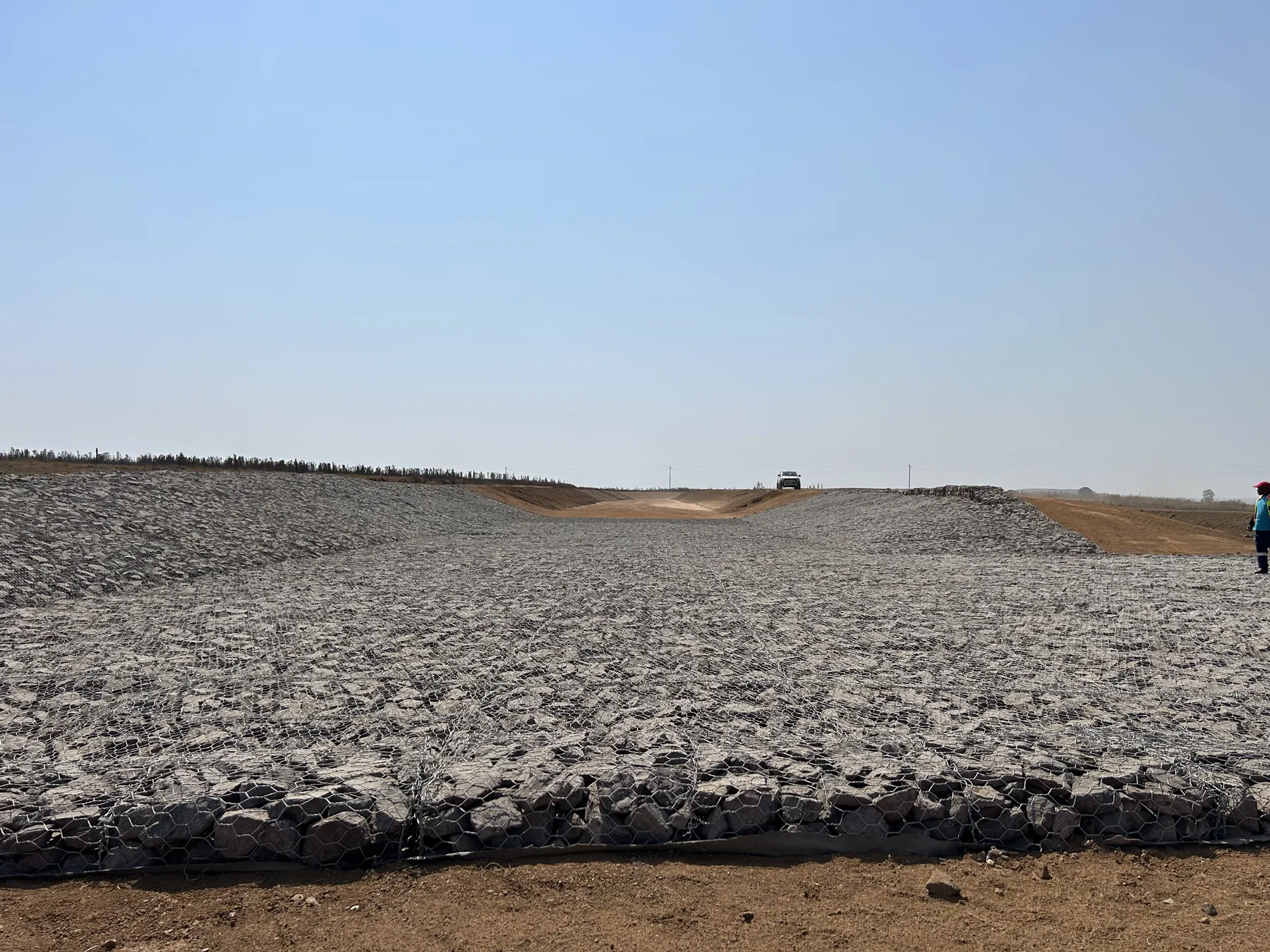
- Gabions are rock confined in wire baskets, so the whole basket acts as one heavy, coherent block. This lets you use smaller stone than loose riprap would need and build steeper, more structural forms — walls, drops, stepped faces.
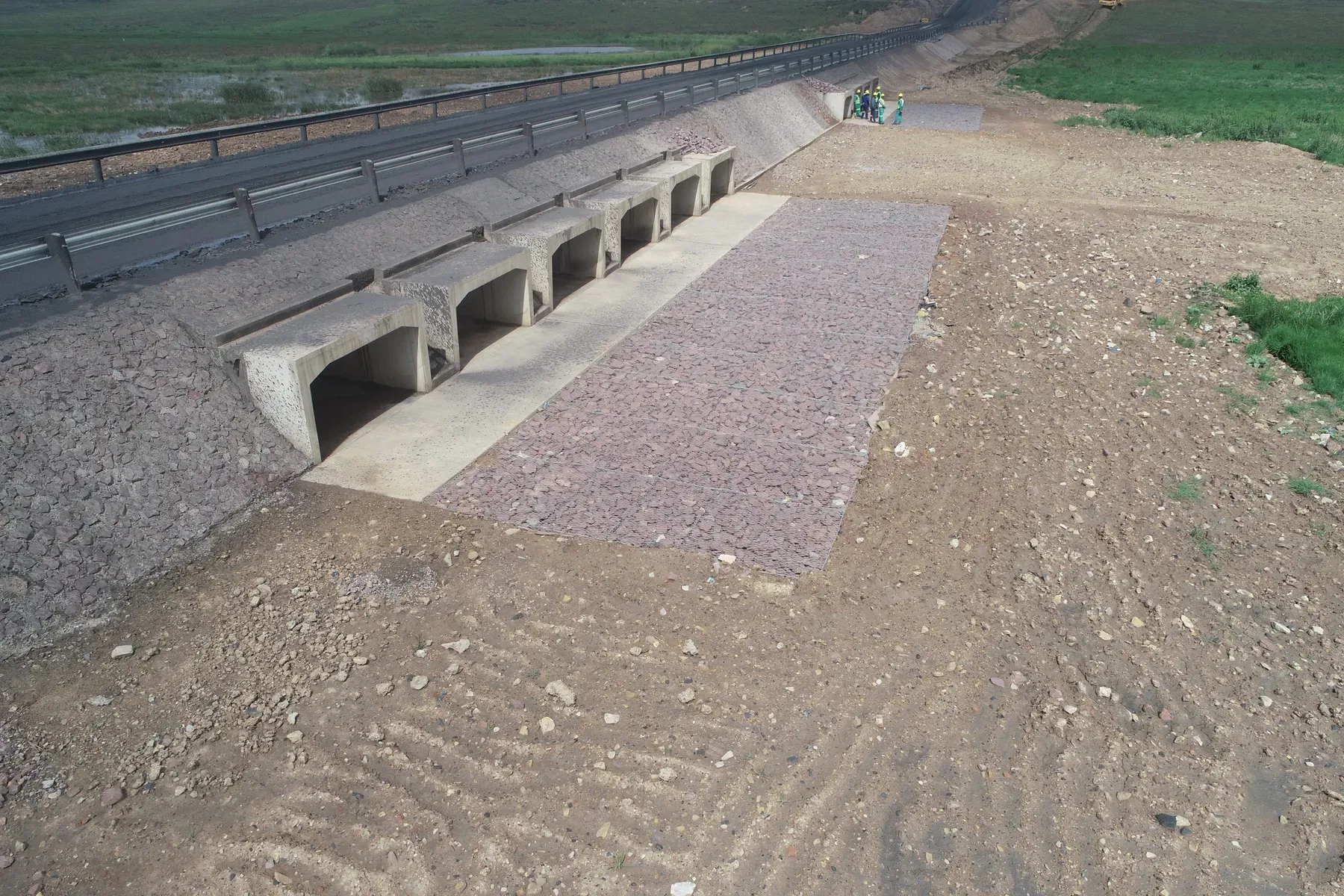
- Reno mattresses are thin, wide gabion baskets — think a mattress of small stone in mesh — laid across a bed or bank as a continuous flexible blanket. They suit lining channels and beds where you want a low-profile, flexible cover rather than a mass structure.
Velocity and shear limits, in plain terms
The practical ordering most of the time: loose riprap handles moderate velocities and conforms well to uneven ground; Reno mattresses extend the tolerable range for a thin lining because the confinement stops individual small stones from being plucked out; and gabions take the highest velocities and steepest geometries because the basket holds everything together as a unit. But the numbers depend on the actual shear the flow imposes — depth and slope, not just how fast the water looks — which is the same shear-not-velocity point that governs why protection fails.
Durability and maintenance realities in South Africa
This is where the theoretical ordering meets local conditions, and it changes decisions:
- Wire corrodes. In aggressive, saline, or sediment-laden water, gabion and mattress mesh has a finite life; once the wire fails, the structure becomes loose rock. Riprap has no wire to lose.
- Theft and vandalism of gabion wire and stone is a genuine, recurring problem on accessible sites — sometimes decisive against a wire solution in a high-risk location.
- Sediment and vegetation colonise mattresses and gabions, which is not always bad (it can lock them in) but changes hydraulic roughness and maintenance.
Cost and constructability
Riprap is often cheapest where suitable rock is available locally and space allows. Gabions and mattresses cost more per square metre and are more labour-intensive to build, but they buy you steeper geometry and a smaller footprint — which can be the deciding factor on a constrained site where riprap simply will not fit. The right comparison is total installed cost for the geometry you actually have, not unit rate.
The filter layer applies to all three
Whichever system you choose, it sits on a filter layer — graded stone or geotextile — that lets water through while holding the soil. This is not optional, and skipping it is the single most common reason all three systems fail prematurely. If a quote or a detail leaves it out, that is a red flag, not a saving.
A plain decision guide
| Situation | Usually the best fit |
|---|---|
| Space available, local rock, moderate velocity | Riprap |
| Bed/bank lining, low profile, flexible cover | Reno mattress |
| Steep geometry, high velocity, constrained footprint | Gabions |
| High theft/vandalism risk, aggressive water | Riprap (no wire to lose) |
These are starting points, not rules — the real choice comes from the design shear, the site’s soils, the available space, and the local theft and water-chemistry realities, which is exactly what a proper design weighs up.
See our scour and erosion protection service for design across all three systems, or get in touch to talk through what suits your channel and site conditions.
Working on a site where flooding, stormwater, or floodlines are a concern? Send us a message about it and we’ll reply within one business day — no obligation.
Talk to an engineer