

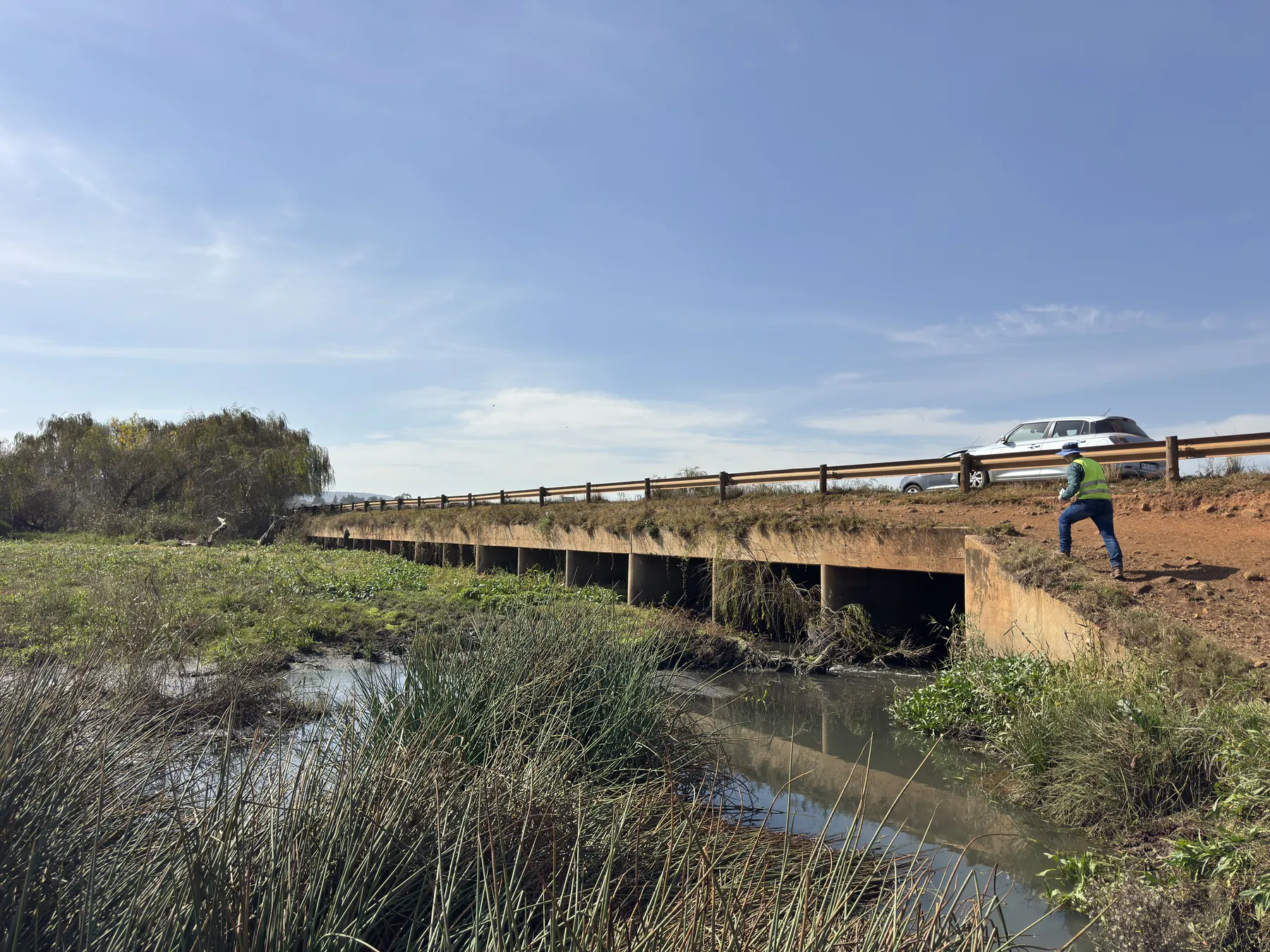
What We Find When We Inspect Culverts: Common Defects That Quietly Erase Capacity
· Written by Stephan Dreyer · Reviewed by Robert Fortuin
A culvert that looks fine from the road can be operating at a fraction of the capacity it was designed for. Unlike a collapsed bridge, a culvert losing capacity gives almost no visual warning — until the day it backs up and floods the road. When we inspect culverts across municipal and road networks, the same handful of defects come up again and again, and most of them are silent.
Culverts on your network you have never had assessed? We inspect and quantify what capacity is actually left — before a flood does the assessment for you.
Culvert designSedimentation and vegetation in the barrel
The most common capacity-killer is the least dramatic: sediment and vegetation building up inside the barrel. A culvert designed for a full open section may be running half-choked with silt, sand, and established reeds. Because capacity depends on the flow area and the roughness, a barrel that has lost a third of its section to sediment has lost considerably more than a third of its capacity — the roughness of the vegetated, silted surface compounds the loss.
Debris blockage at the inlet
The inlet is where floods deliver their debris load — branches, plastic, fencing, whatever the catchment washes down. A partial debris blockage across the inlet does exactly what a smaller inlet would: it puts the culvert into a more severe inlet-control condition and raises the headwater. The frustrating part is that the debris often clears itself after the flood, so a post-event inspection can find a “clean” culvert that nonetheless flooded badly at the peak.
Outlet scour undermining the structure
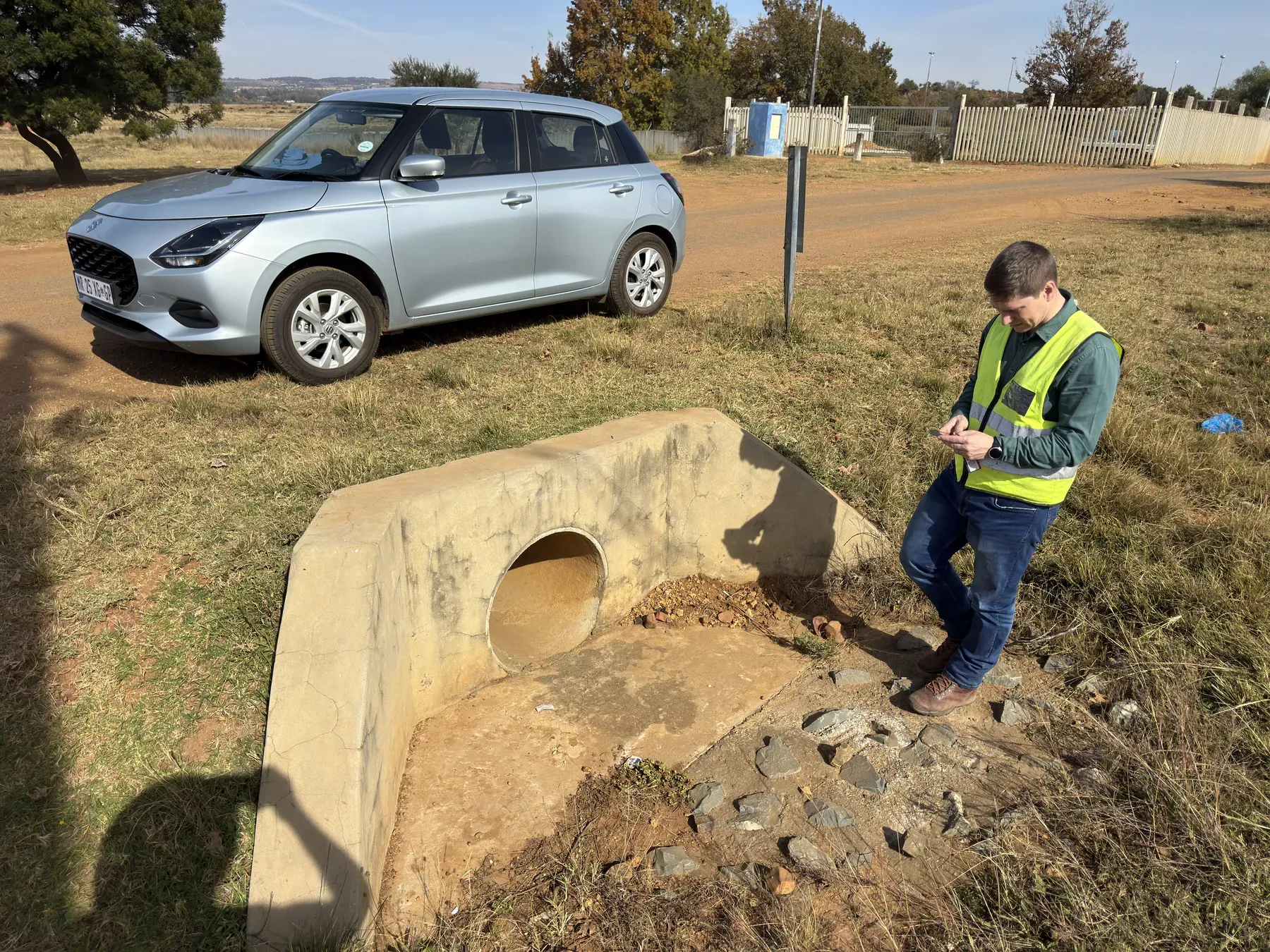
Where the barrel discharges, high outlet velocity attacks the channel bed and banks. Left unprotected, that scour works backwards toward the structure, undermining the outlet apron, the wingwalls, and eventually the barrel itself. A scour hole at the outlet is both a structural warning and evidence that the outlet needs energy dissipation and erosion protection it currently lacks.
Headwall, wingwall, and approach distress
We also routinely find:
- Cracked or displaced headwalls and wingwalls, which compromise both the structure and the inlet hydraulics.
- Approach-channel misalignment, where the channel has migrated so flow no longer enters the culvert cleanly, effectively skewing the inlet and cutting capacity.
- Joint separation and infiltration in the barrel, letting fines wash in and undermining bedding.
How a capacity check actually works
Turning “it looks blocked” into a defensible answer follows a consistent workflow: survey the structure and the approach and departure channels as they exist now (not as-built); model the hydraulics with the real, degraded geometry and roughness; and deliver a verdict on the capacity the culvert genuinely has today against the flood it is supposed to pass. That is the difference between a hunch and a number a road authority can act on — and it often draws on the same hydraulic modelling we use for new design.
The maintenance-versus-upgrade decision — and who pays
Once you know the real capacity, the decision is economic: does clearing and maintaining the existing culvert restore enough capacity, or has the catchment changed so much that an upgrade is warranted? This is where responsibility gets contested. A culvert that floods because it was never maintained is a different liability question from one that is simply undersized for a developed catchment — and when the flooding causes damage, that distinction drives who pays. A flood damage assessment after an event often turns on exactly this point.
See our culvert design service for capacity assessments and upgrade design, or get in touch if a culvert on your network keeps surcharging and you need to know whether it is blocked, undersized, or both.
Working on a site where flooding, stormwater, or floodlines are a concern? Send us a message about it and we’ll reply within one business day — no obligation.
Talk to an engineer