

How Culvert Sizing Actually Works (and Why "Just Add Another Pipe" Fails)
· Written by Stephan Dreyer · Reviewed by Robert Fortuin
When a culvert floods a road, the instinct is understandable: add another pipe. Sometimes that works. Often it does nothing, because the pipe was never the constraint. Culvert sizing is one of those problems where the intuitive answer and the hydraulic answer diverge — and knowing why saves both money and repeat failures.
Culvert flooding a road and nobody sure why? We establish which control regime actually governs before anyone specifies concrete — it decides whether a bigger barrel buys you anything.
Culvert designIt starts with the design flood, not the pipe
Before any sizing happens, you need the flow the culvert must pass — the peak discharge for the chosen design event. That comes from the catchment hydrology, and the return period comes from the road class or the consequence of overtopping. Get the design flood wrong and everything downstream of it is precise but incorrect. This is why culvert design is a hydrology problem before it is a concrete problem.
Inlet control vs outlet control — the distinction that governs everything
A culvert operates under one of two regimes, and which one applies decides how you make it bigger.
- Inlet control: the culvert’s capacity is limited by how much water the entrance can take in. The barrel could carry more, but the inlet is the bottleneck. Here, the shape and edges of the inlet — bevelled, projecting, headwalled — matter enormously, and lengthening the barrel does nothing.
- Outlet control: capacity is limited by the barrel and the downstream conditions — friction through the pipe, the tailwater level, the outlet. Here, barrel size, roughness, and length all matter, and a high downstream water level can drown the whole thing.
A culvert can switch between the two depending on the flow. The reason “just add another pipe” so often fails is that it addresses barrel capacity — an outlet-control lever — when the structure is actually in inlet control, or when the real limit is the tailwater downstream. More barrel does not help a bottleneck it does not touch.
Allowable headwater is the real design limit
The number that usually controls the design is not the pipe size — it is the allowable headwater (HW): how high the water is permitted to pond at the inlet before it damages the road, floods upstream property, or overtops. Sizing is the exercise of finding a barrel arrangement that passes the design flood without exceeding that allowable headwater, usually expressed as a headwater-to-height ratio (HW/D). It is HW/D that governs, and a culvert that “fits the flow” but ponds water over the allowable level has failed even if it never overtops.
Multiple barrels, blockage, and skew — where capacity quietly leaks
Real culverts rarely behave like the textbook single pipe:
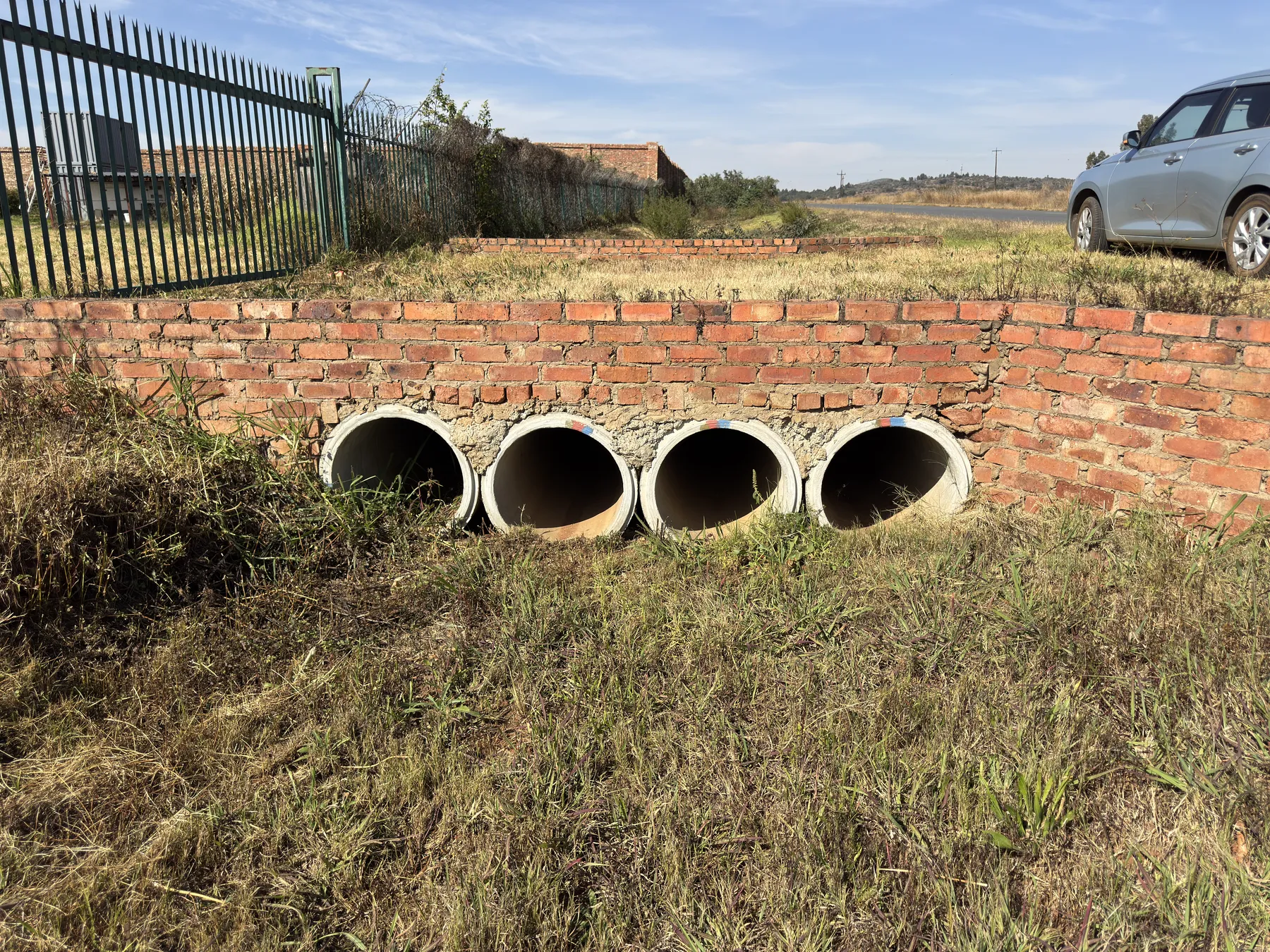
- Multiple barrels do not add capacity linearly, and in inlet control the gain from a second or third barrel is smaller than the arithmetic suggests. They also collect debris and sediment between them.
- Blockage allowances matter: a culvert designed for a clean barrel will not stay clean. A realistic design derates capacity for the debris and sediment it will actually accumulate — the same defects we cover in what we find when we inspect culverts.
- Skewed alignments — where the road crosses the watercourse at an angle — cost real capacity and complicate the inlet, as flow has to turn to enter the barrel.
When a bigger culvert is the wrong answer
The most important thing a competent design does is recognise when upsizing is not the fix. If the downstream channel cannot carry the extra flow, a bigger culvert just moves the flooding a hundred metres and raises outlet velocities that scour the receiving channel — which is where energy dissipation and erosion protection come in. Sometimes the right answer is a differently shaped inlet, sometimes it is downstream capacity, and sometimes it is accepting a controlled overtopping frequency rather than chasing a bigger structure.
South African road culvert design is anchored by SANRAL’s Drainage Manual, which sets out the design floods, headwater criteria, and structure standards in detail. The manual is the reference; the judgement is in reading the site.
See our culvert design service for how we size and check structures against the right design flood and headwater criteria, or get in touch if a culvert on your project keeps flooding despite looking big enough.
Working on a site where flooding, stormwater, or floodlines are a concern? Send us a message about it and we’ll reply within one business day — no obligation.
Talk to an engineer