What are H&H training courses?
Our training translates practical hydrology and hydraulic modelling workflows into skills teams can apply immediately—grounded in South African standards and review culture.
Training that sticks after the workshop
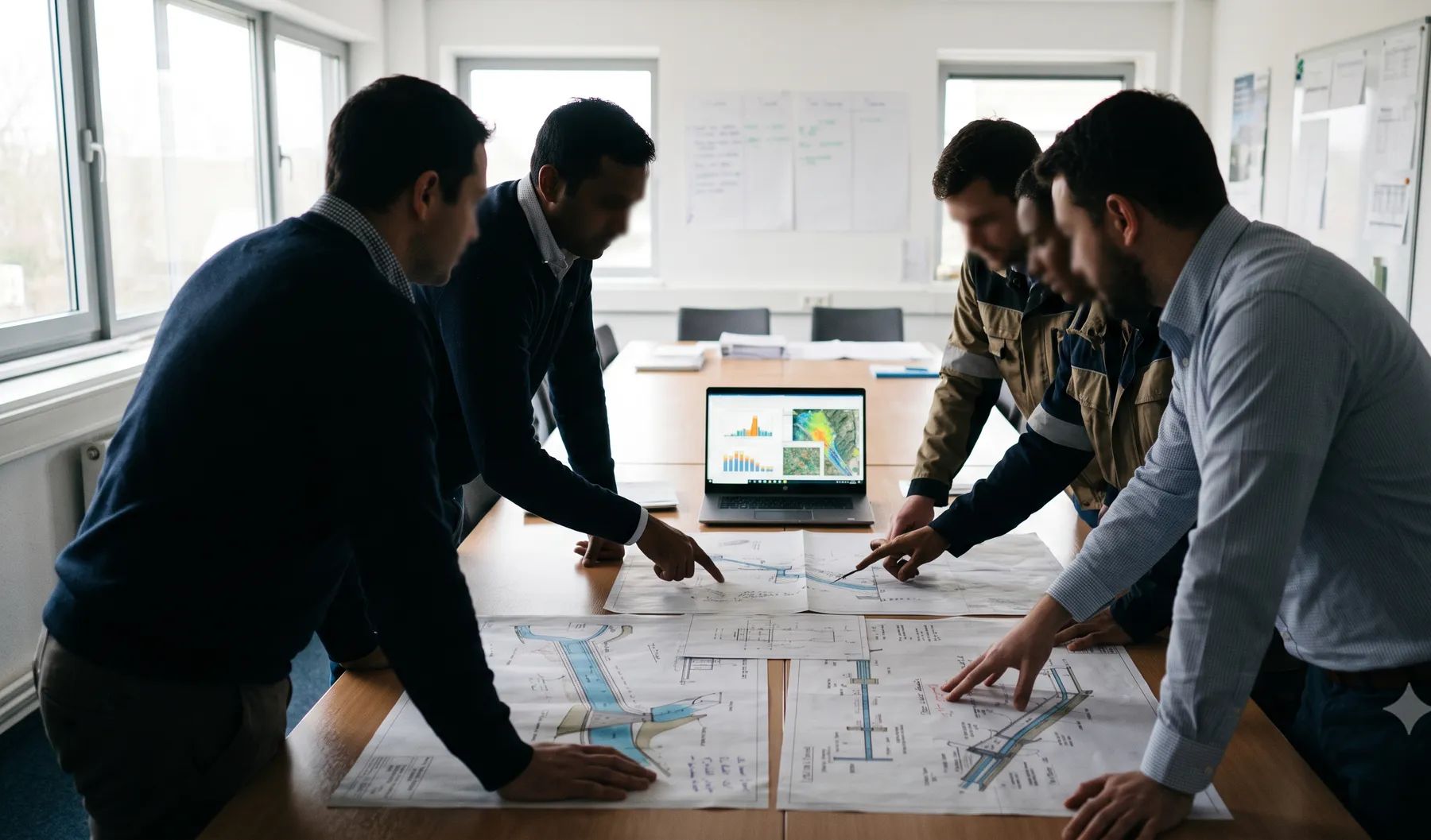
We optimise for muscle memory on your toolchain, whether that’s PCSWMM or HEC-RAS: the same clicks, checks, and figure styles your reviewers expect, rather than abstract theory alone. Exercises are scoped so junior engineers can finish them in-session with mentor support.
Bridging to live projects
Where teams move straight from training into a live submission, we can align the final module with a current project file (under confidentiality) so lessons land on real geometry and policy constraints.
What we typically need from you
- Team size, software versions (PCSWMM, HEC-RAS, MIKE), and lab machine specs
- Example projects or catchments you want exercises built around (anonymised)
- Municipal or client review checklists you need trainees to satisfy
- Desired outcomes (onboarding, model QA, flood/stormwater workflows) and duration
Where we add technical depth
- Hands-on modules with realistic QA checkpoints reviewers use
- SA standards context woven into exercises
- Slide packs and model templates your team can reuse under agreed IP terms
- Optional assessments or attendance documentation for HR records
When do you need this?
- Onboarding graduates into flood and stormwater workflows
- Upskilling teams before major project reviews
- Client-specific toolchains (PCSWMM, HEC-RAS) with SA context
Our approach
-
Curriculum alignment
Match modules to your software stack and project types.
-
Hands-on labs
Work through realistic catchments and model checks.
-
Review expectations
Teach what reviewers look for in hydrology/hydraulic submissions.
What you'll receive
- Course materials and exercises
- Attendance certificates (where applicable)
Relevant SA standards
- SANRAL and municipal review expectations (as module topics)
FAQ
Do you run public courses or in-house training?
We run in-house cohorts primarily; public dates can be arranged for larger groups.
Who provides the software licences?
Clients typically provide lab licences; we advise minimum versions beforehand.
How long does a course run?
Typical modules run 1–3 days depending on depth and exercises required.
Can content be recorded?
Recording is agreed per engagement under the intellectual property terms, the same terms that govern how your team may reuse the slide packs and model templates.
What prerequisites do trainees need?
We tailor prerequisites to the modules. Basic hydraulics familiarity helps for the advanced modelling modules, and exercises are scoped so junior engineers can finish them in-session with mentor support.
Author
Stephan DreyerAreas we serve
We work on projects across South Africa — see locations.
Related services
Ready to get started?
Contact us