Data Pipelines for Water Utilities: From Telemetry to Decision
· Written by Stephan Dreyer · Reviewed by Robert Fortuin
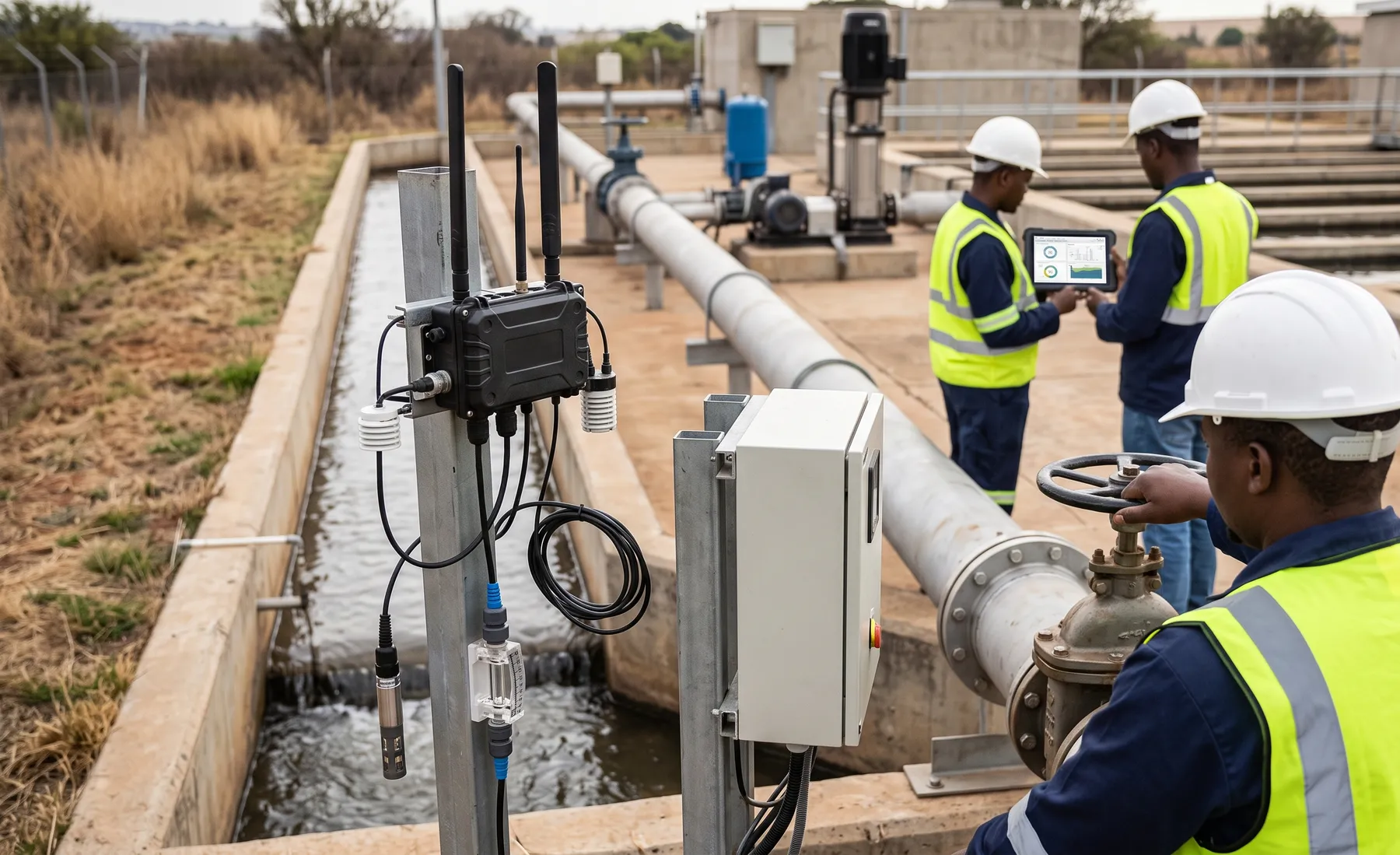
A water utility generates data continuously — level sensors, flow meters, rainfall gauges, pump telemetry, quality probes — and uses a surprisingly small fraction of it. The gap is rarely the sensors. It is everything between the sensor and the decision: the raw streams are scattered, patchy, and in incompatible formats, so the information they contain never quite arrives where someone could act on it. A data pipeline is the plumbing that closes that gap, and building it well is what turns telemetry into decisions.
Sitting on telemetry you cannot act on? We build the pipeline between the sensors and the decision — and the hydrological judgement to know which numbers actually matter.
Surface water managementWhat a data pipeline actually is
A pipeline is the automated path from raw data at the source to clean, usable information at the point of decision. It typically covers four stages:
- Ingest — pulling data in reliably from telemetry, loggers, third-party feeds, and existing databases, in whatever formats they arrive.
- Clean and validate — handling the gaps, spikes, drift, and duplicate records that every real sensor network produces, so bad data does not silently corrupt the answer.
- Transform and integrate — putting different sources onto common units, timesteps, and locations so they can actually be used together.
- Deliver — landing the result where it is needed: a dashboard, a model input, a report, or an alert.
The stages sound mundane, and that is the point — done manually they consume staff time and introduce errors; automated, they run reliably in the background.
The real problem: data quality, not data volume
The hard part of a water-utility pipeline is almost never getting enough data — it is trusting the data you have. Sensors fail, drift out of calibration, drop out during exactly the storm events you most care about, and log in inconsistent formats. A pipeline that ingests raw telemetry without validating and cleaning it just delivers unreliable data faster. The validation logic — flagging the implausible reading, filling or marking the gap, catching the drift — is where a pipeline earns its trust, and it is the part generic tools handle worst.
From telemetry to decision
The value only lands when the clean data reaches a decision. Depending on the utility, that might be operational (is this pump station behaving, is this reservoir tracking demand), planning (what do the last five years of flows actually show), or safety and compliance (are we within our licence, is a level trending toward a threshold). A good pipeline is designed backwards from the decision — what question does this need to answer — rather than forwards from whatever the sensors happen to emit. That is what keeps it from becoming another data lake nobody drinks from.
Reliability and traceability
Because utilities make operational and compliance decisions on this data, the pipeline has to be reliable and traceable: it runs without babysitting, it records what it did to the data, and an output can be traced back to its raw inputs. This is the same principle behind all our GIS-integrated, repeatable workflows — an automated process is only trustworthy if you can audit it, and for regulated water data that auditability is not optional.
Built for your sources and decisions
Every utility’s data landscape is different — different sensors, systems, formats, and decisions — so a pipeline is built to fit, not bought off the shelf. The engineering is in connecting your specific sources to your specific decisions reliably, which is what data pipelines and integration work is really about.
See our data pipelines and integration offering for custom pipeline development, or get in touch if your utility is rich in telemetry but poor in the information you can actually act on.
Working on a site where flooding, stormwater, or floodlines are a concern? Send us a message about it and we’ll reply within one business day — no obligation.
Talk to an engineer